Blog
When Wabi-sabi Aesthetics Enter Daily Life: Some space need “Imperfection”
Have you ever experienced that peculiar sense of exhaustion after scrolling through endless, "flawless" showrooms online? Perfection, when stripped of human vitality, often yields nothing but aesthetic fatigue. In contrast, it is often the slight irregularity of a coarse ceramic bowl. The organic edges and fine kiln cracks captures our gaze and forces us to linger.

Raku-yaki tea bowls, passed down through centuries in the Japanese tea ceremony, embody this very ethos. Never perfectly round, never smooth, and no two are same. Over years, tea stains gradually permeate the clay, while the warmth of one’s palms polishes a unique patina onto the surface. These traces do not signify age. They transform the bowl into an irreplaceable object of daily life that belongs to you.

Wabi-sabi took root in 15th-century Japan, where visionaries like Murata Jukō and Sen no Rikyū introduced this ethos to the tea ceremony. They pivoted away from ornate gold and silver vessels, choosing instead to embrace the humble, earthy textures of coarse ceramics. This was not a compromise, but a deliberate and profound aesthetic revolution. It was a refusal to be held captive by worldly definitions of "perfection". It was a conscious turn toward the organic, the warm, and the evocative imprints of time.
Centuries have passed, yet this aesthetic has not faded into obsolescence; instead, it has evolved into the most coveted "life antidote" for the contemporary urban
01. Why more people like Wabi-sabi?
The surging popularity of Wabi-sabi is, at its core, a collective rebellion against the tyranny of excessive perfection.

It does not demand that a space remain perpetually pristine; rather, it actively embraces imperfection. In historic European homes, the gentle wear on aged timber floors and the subtle undulations of walls are now celebrated as the primary charm of the spatial aura. The Danish word, "Hygge," describing a comfort that requires no effort. Where a single candle and a cup of warm tea provide sufficient healing aligns perfectly with the logic in Wabi-sabi. The expansive "Liubai" (empty space) in Chinese ink paintings is never about a lack of content, rather about leaving room for the gaze to linger. This is the very essence of Wabi-sabi wisdom within the Eastern context, balancing the void and the solid.
Transcending both geography and eras, we converge toward same direction: home is for living, not for displaying perfection.
02. Common Application of Wabi-sabi in Space
Wabi-sabi might sound like an abstract aesthetic overview, yet it manifests quite tangibly within the sanctuary of our daily spaces. In terms of materiality, many Wabi-sabi environments favor natural elements such as stone, raw timber, and coatings with grains. These materials that inherently preserve a sense of time, evolving gracefully under light and through the rhythm of daily use. This vibrant vitality can not be given by mass-produced industrial materials.

When it comes to the color palette, Wabi-sabi traditionally eschews overly vibrant hues. It favors a spectrum of low-saturation tones like grays, beiges, and earthy ochres which do not aggressively demand your attention. Instead, they offer an immediate release for strained visual nerves, imbuing the space with a profound sense of healing and harmony.
In spatial arrangement, Wabi-sabi places a profound emphasis the artful use of empty space. Walls do not need to be filled. A deliberate distance is maintained between pieces of furniture, where the sight can pause and find stillness.

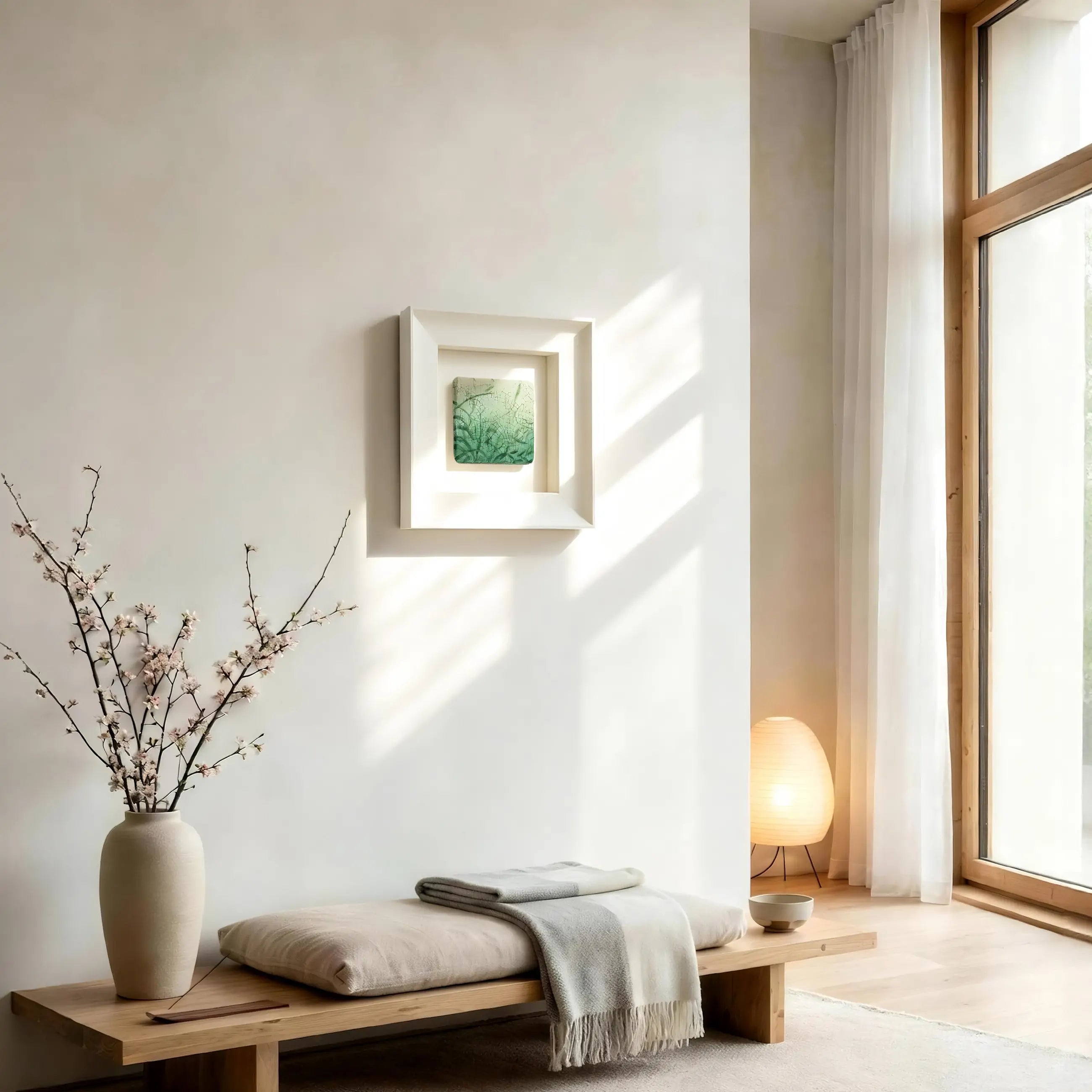
There is a nuanced detail often overlooked: the element of light. Wabi-sabi environments possess a profound affinity for layered, natural illumination. As sunlight filters through the window, descending upon walls and undulating textures, it orchestrates a gentle wave of light and shadow. This dynamic, impermanent beauty is the soul of Wabi-sabi.
Individually, these elements may not seek to overwhelm with ostentation ; yet, when brought into a thoughtful fusion, they cultivate a profound, meditative ease, making people want to stay.
03. The Missing Piece: the Soul of a Wabi-sabi
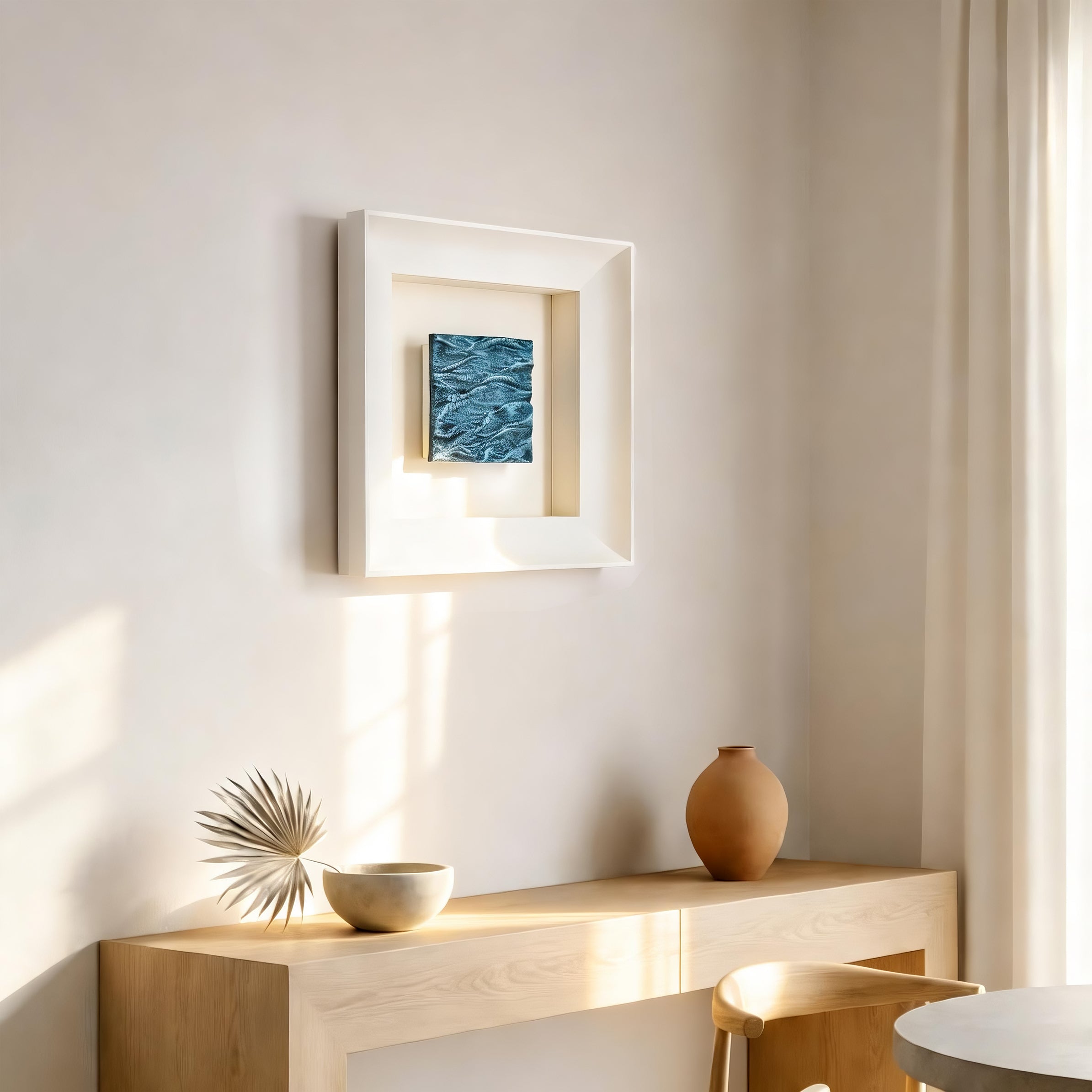
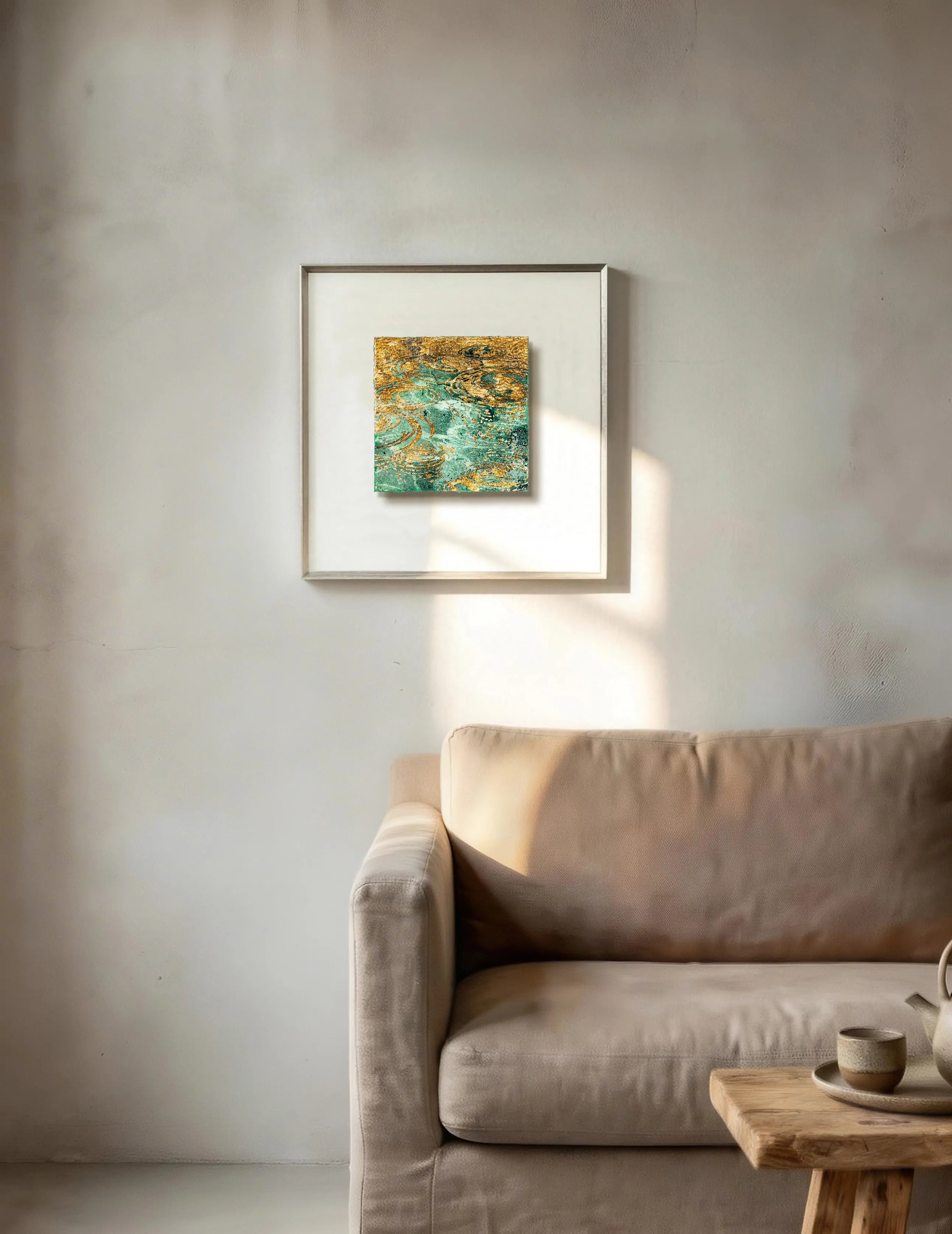
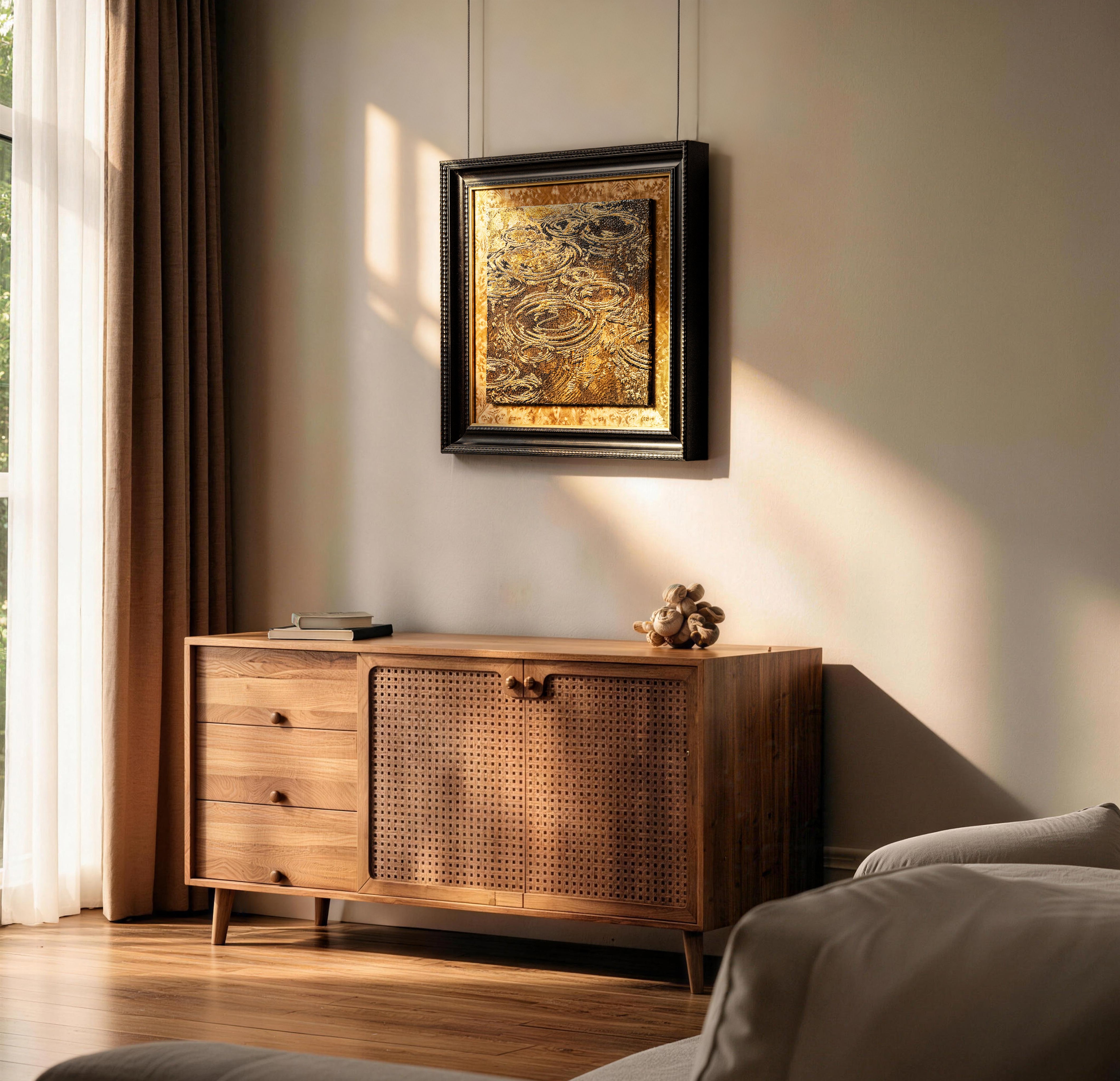
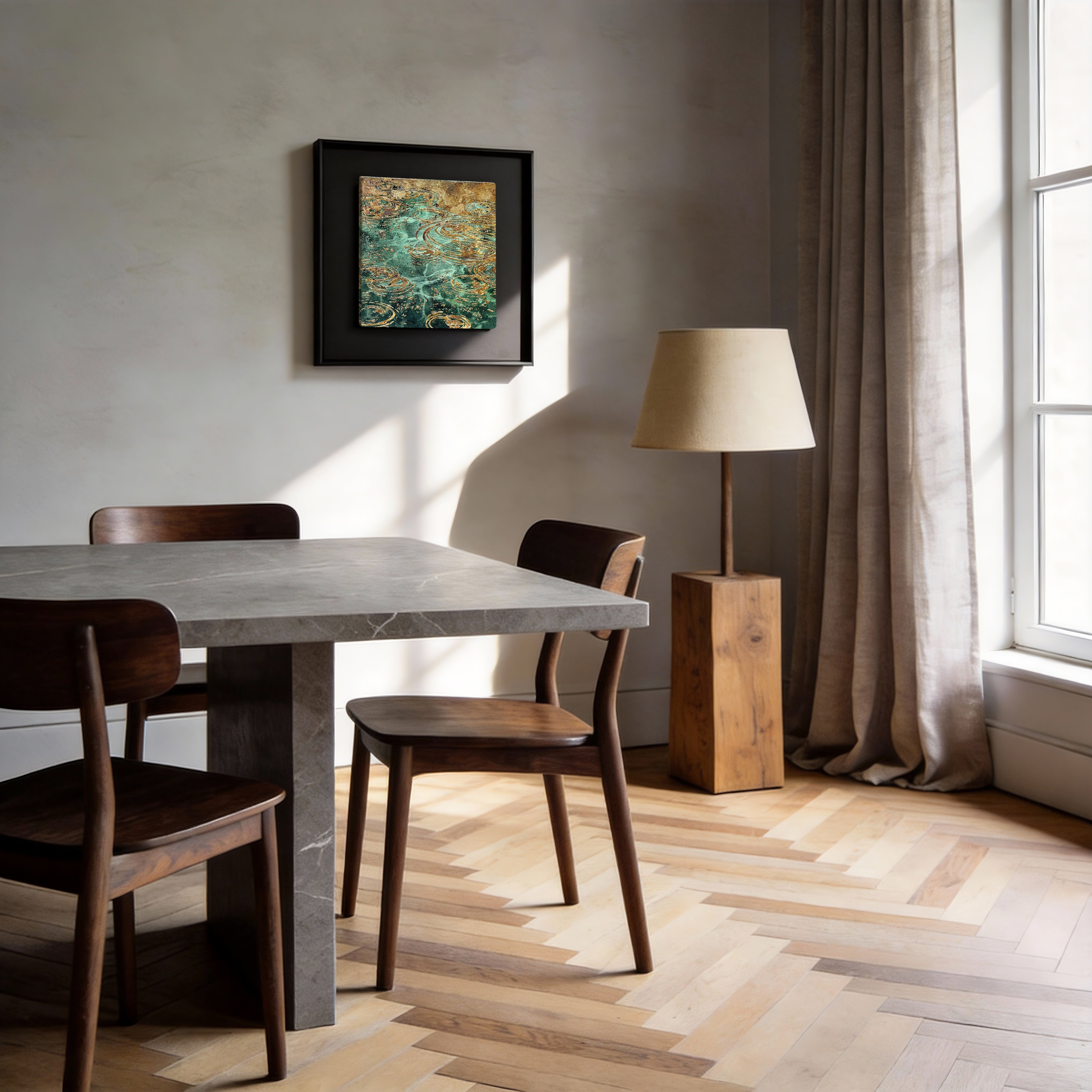
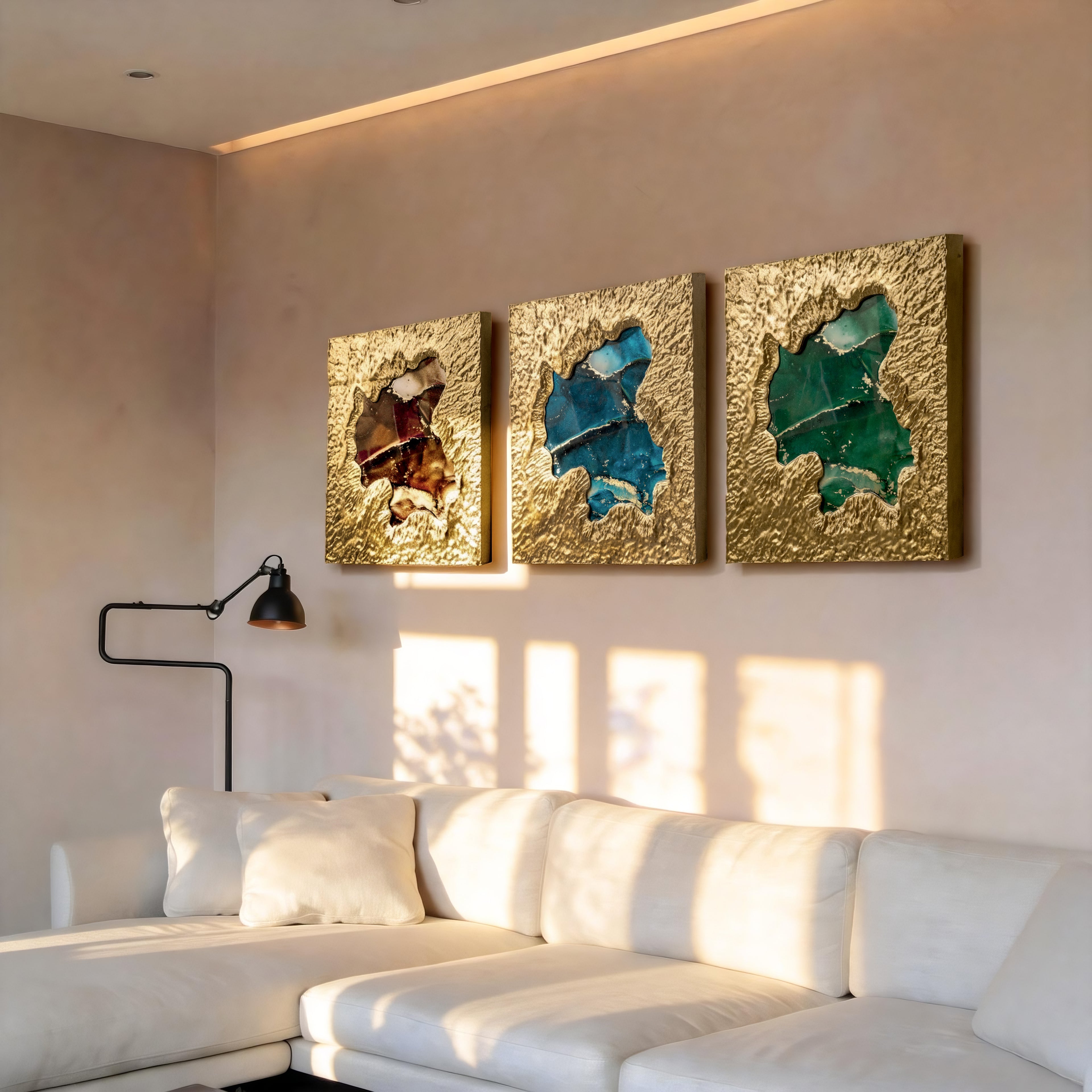
Once we have harmonized materials, the color palette, the use of negative space, and the play of light, the final challenge often lies in selecting the right artwork for the space. A misstep at this critical stage can easily dismantle the entire spatial aura. An overly vibrant or excessively polished decorative painting can instantly shatter the meditative ease of the entire room. A Wabi-sabi home does not demand a piece for mere ostentation. It seeks an artwork that merges with the environment—one that dialogues with shifting shadows and grows alongside time, manifesting a stable and focused spatial aura.

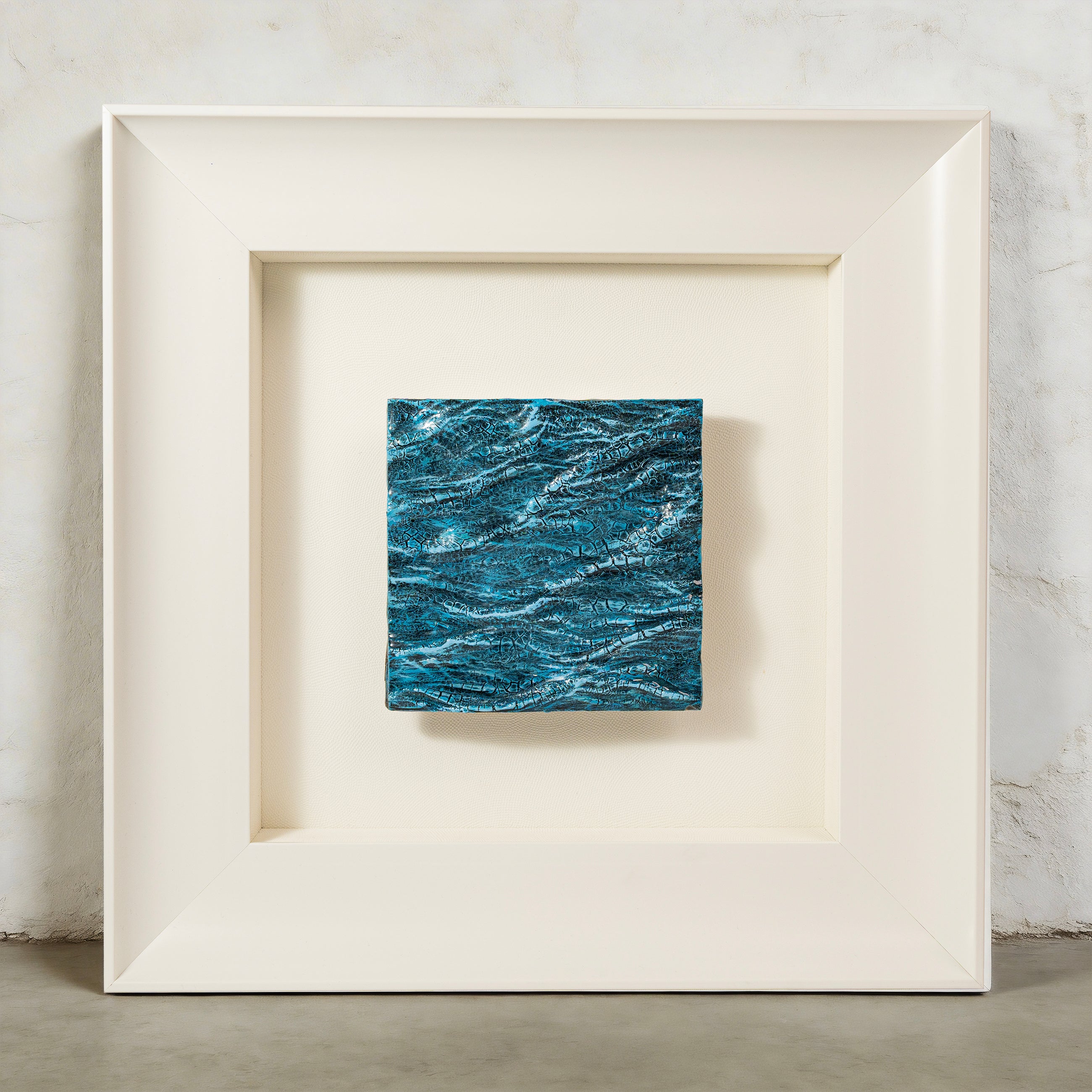
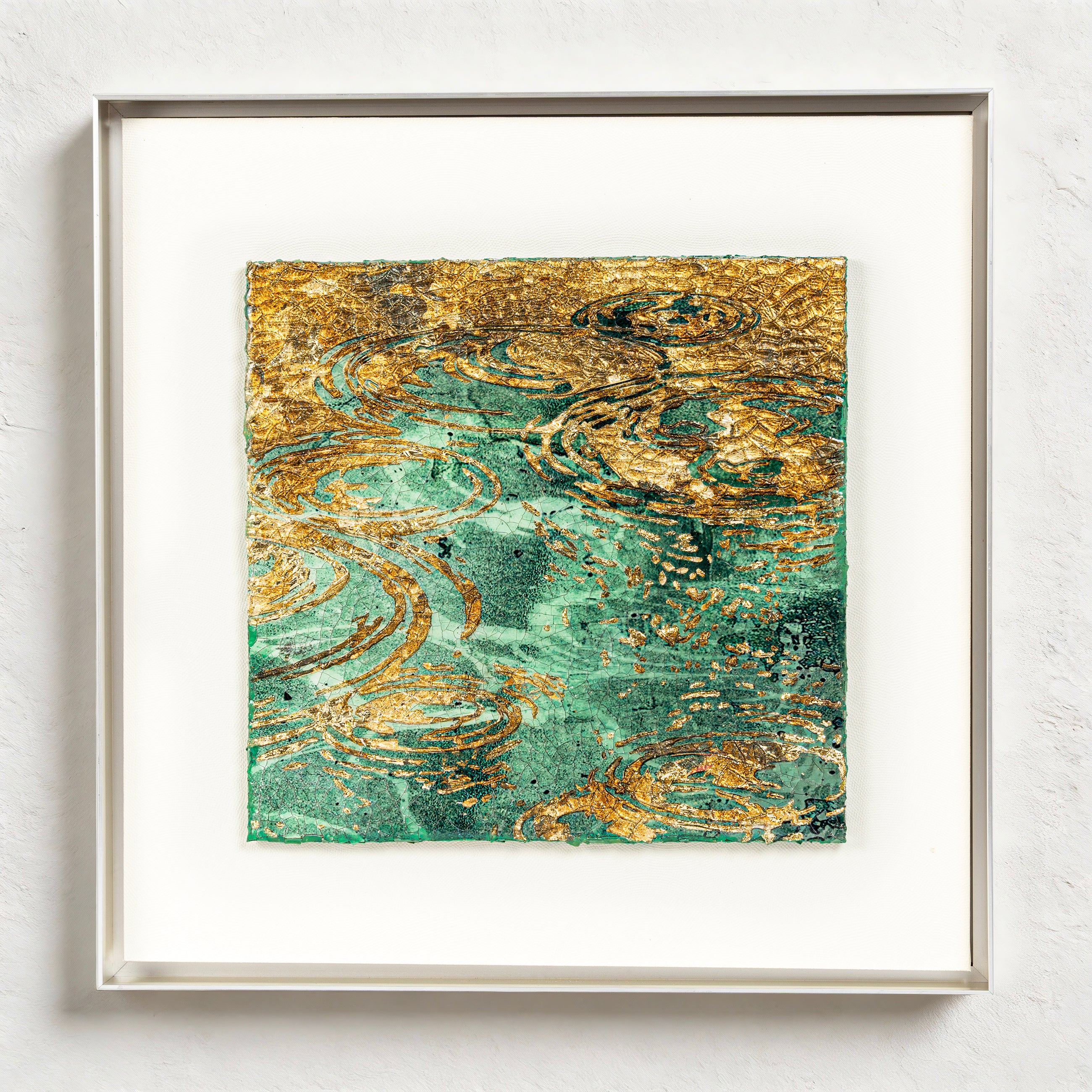
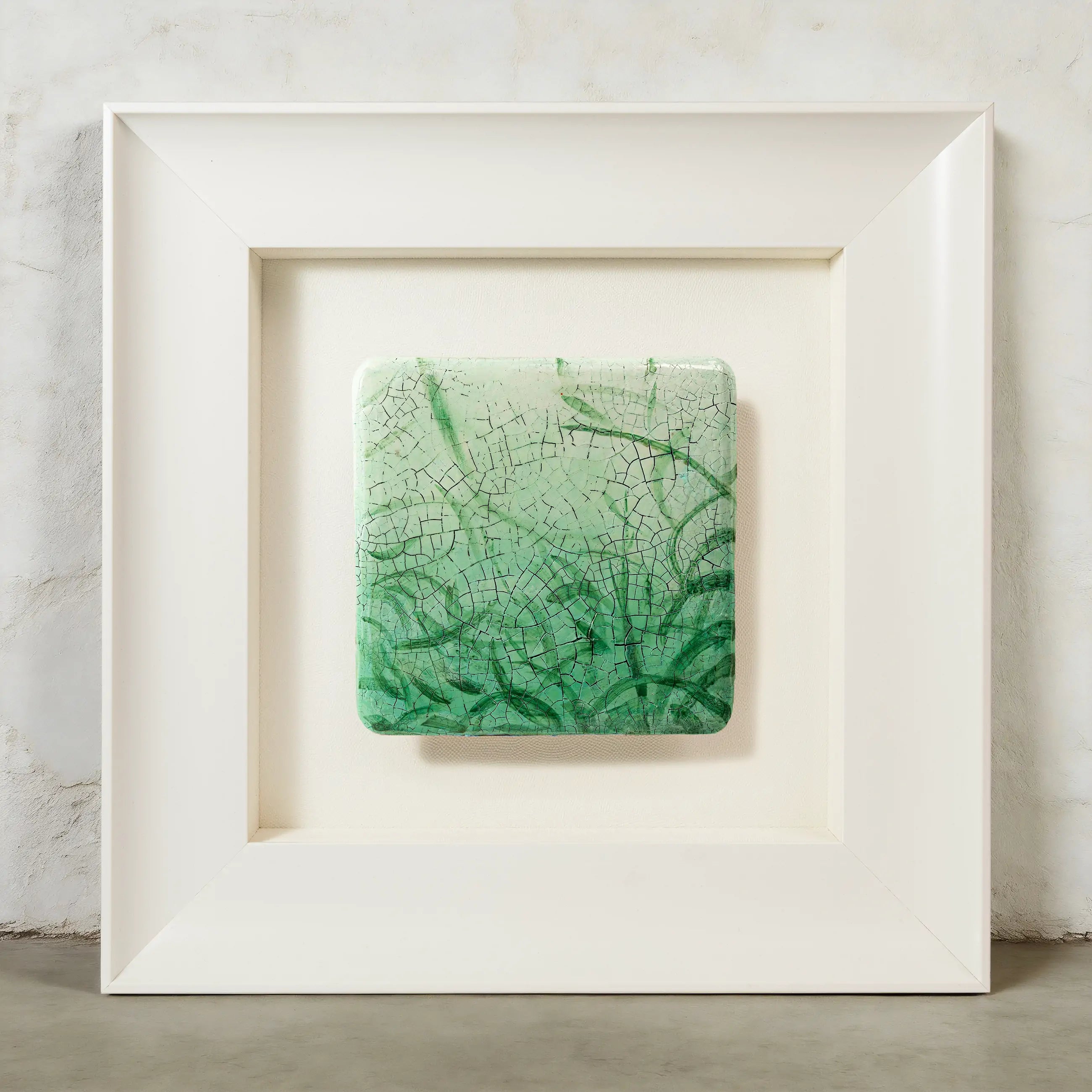
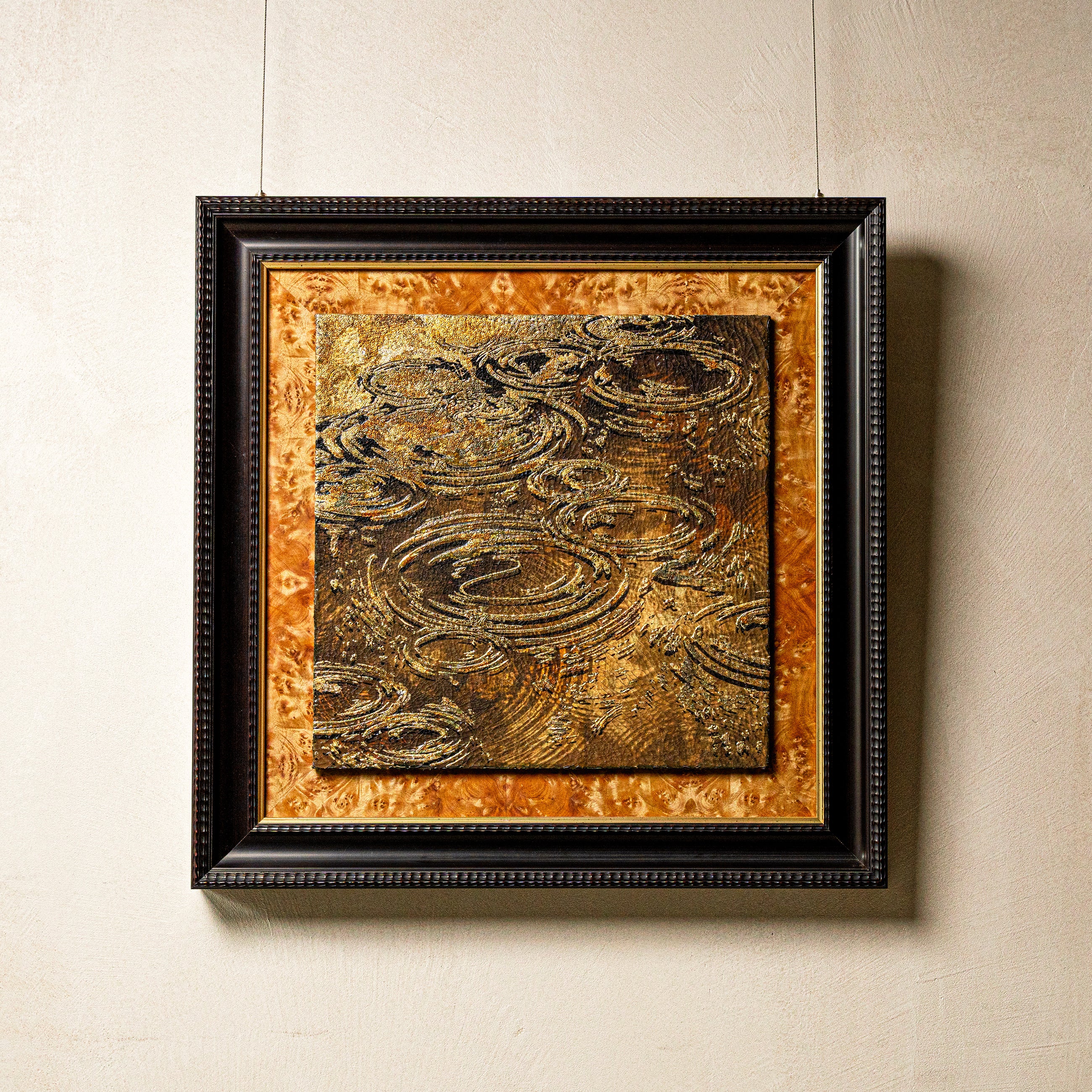
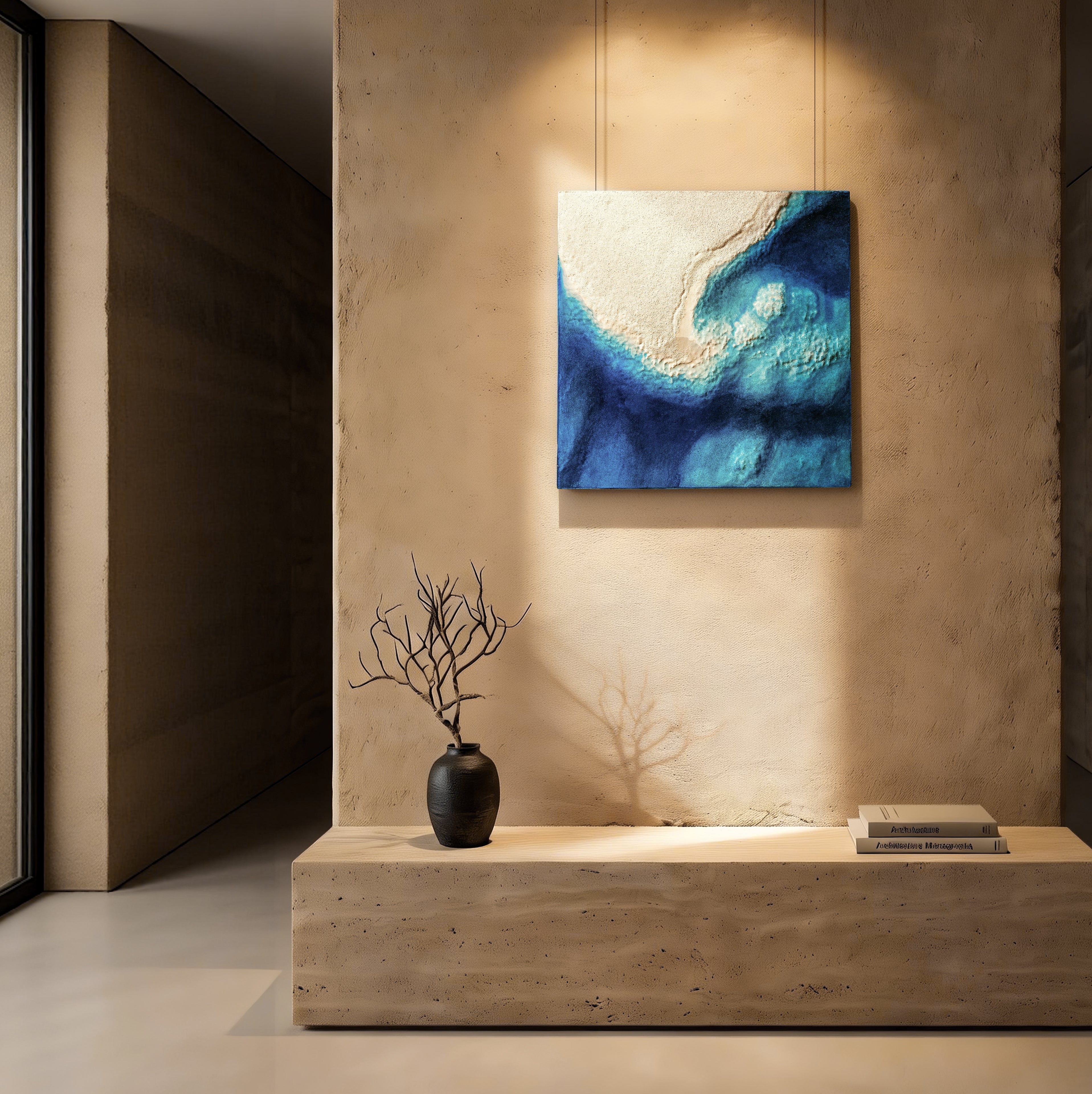
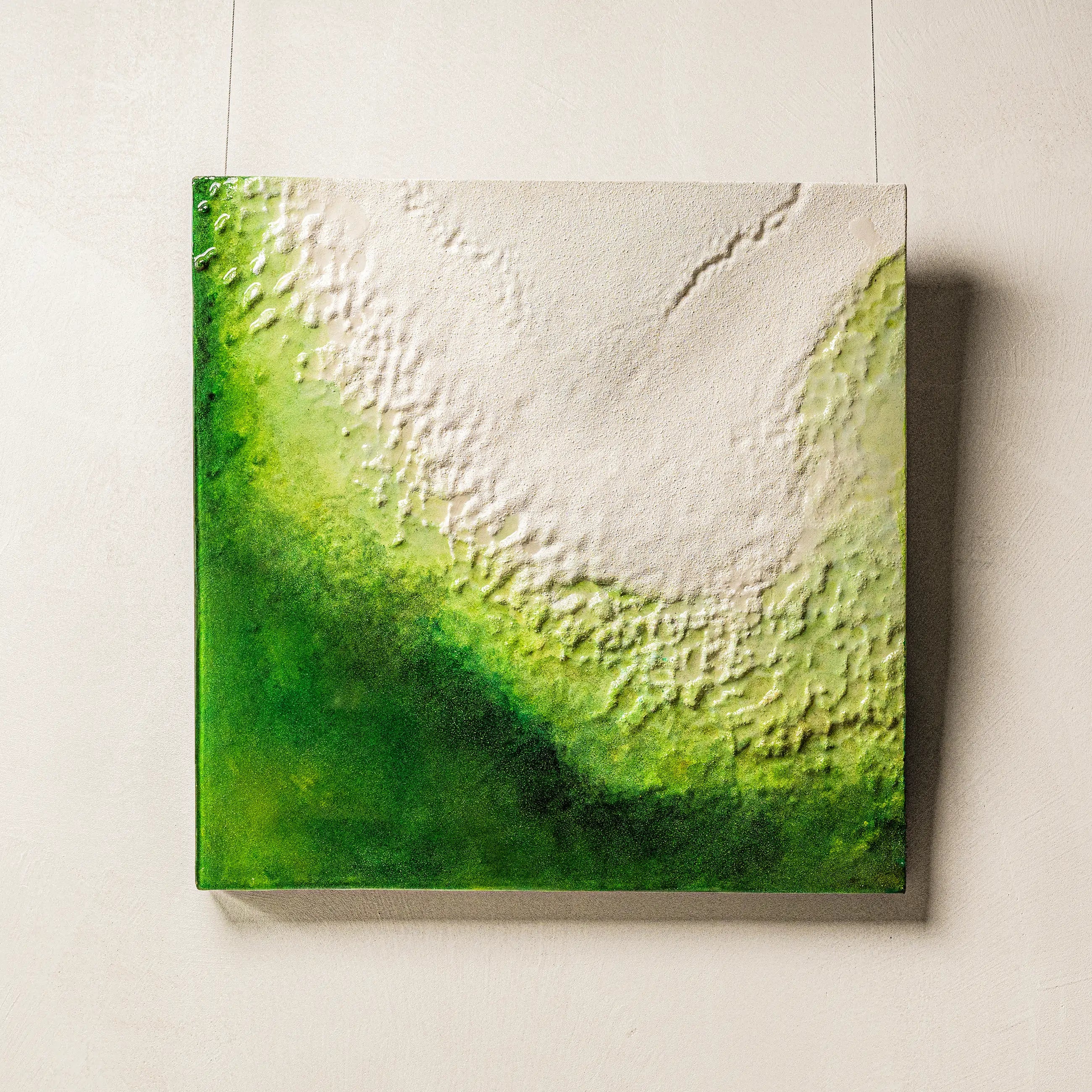
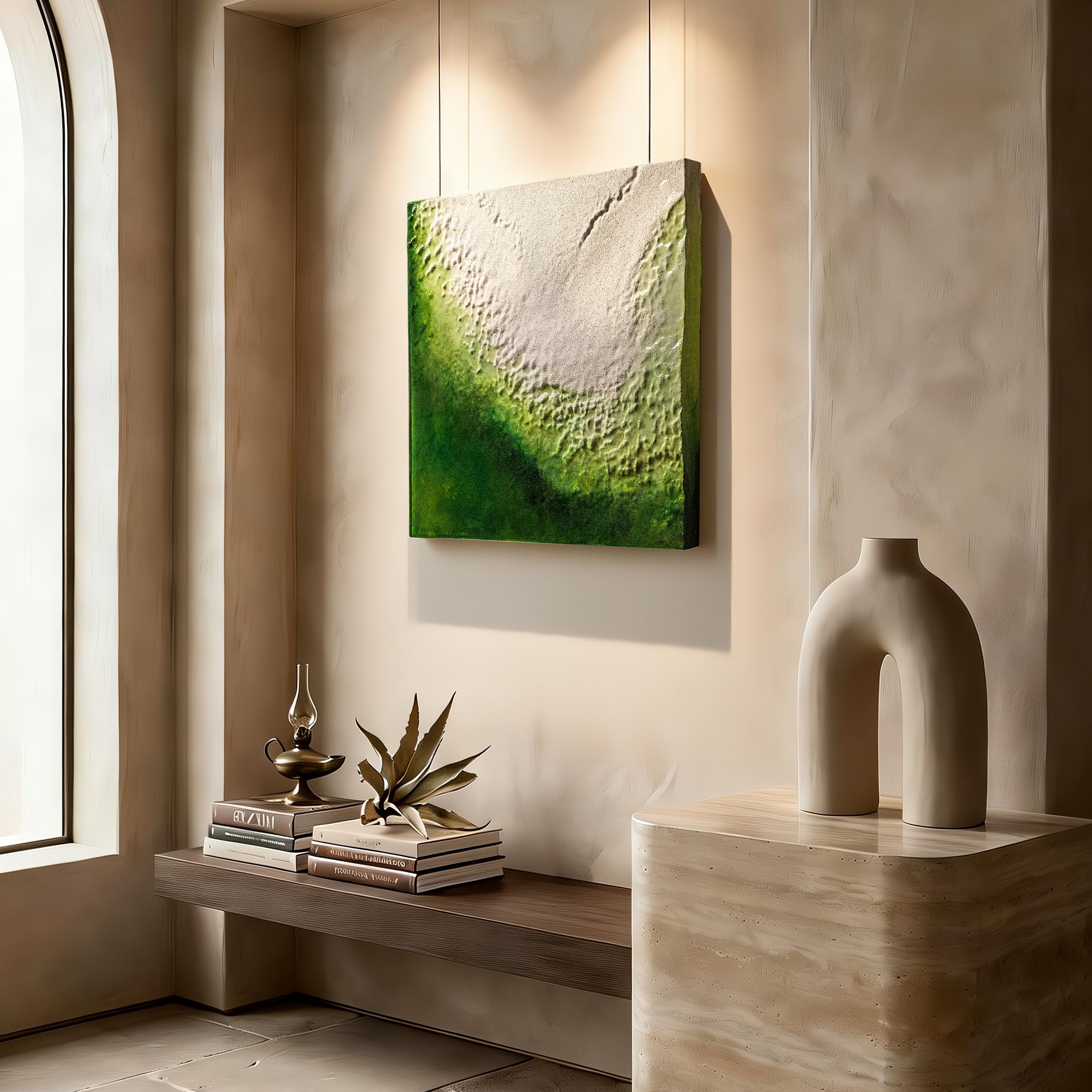
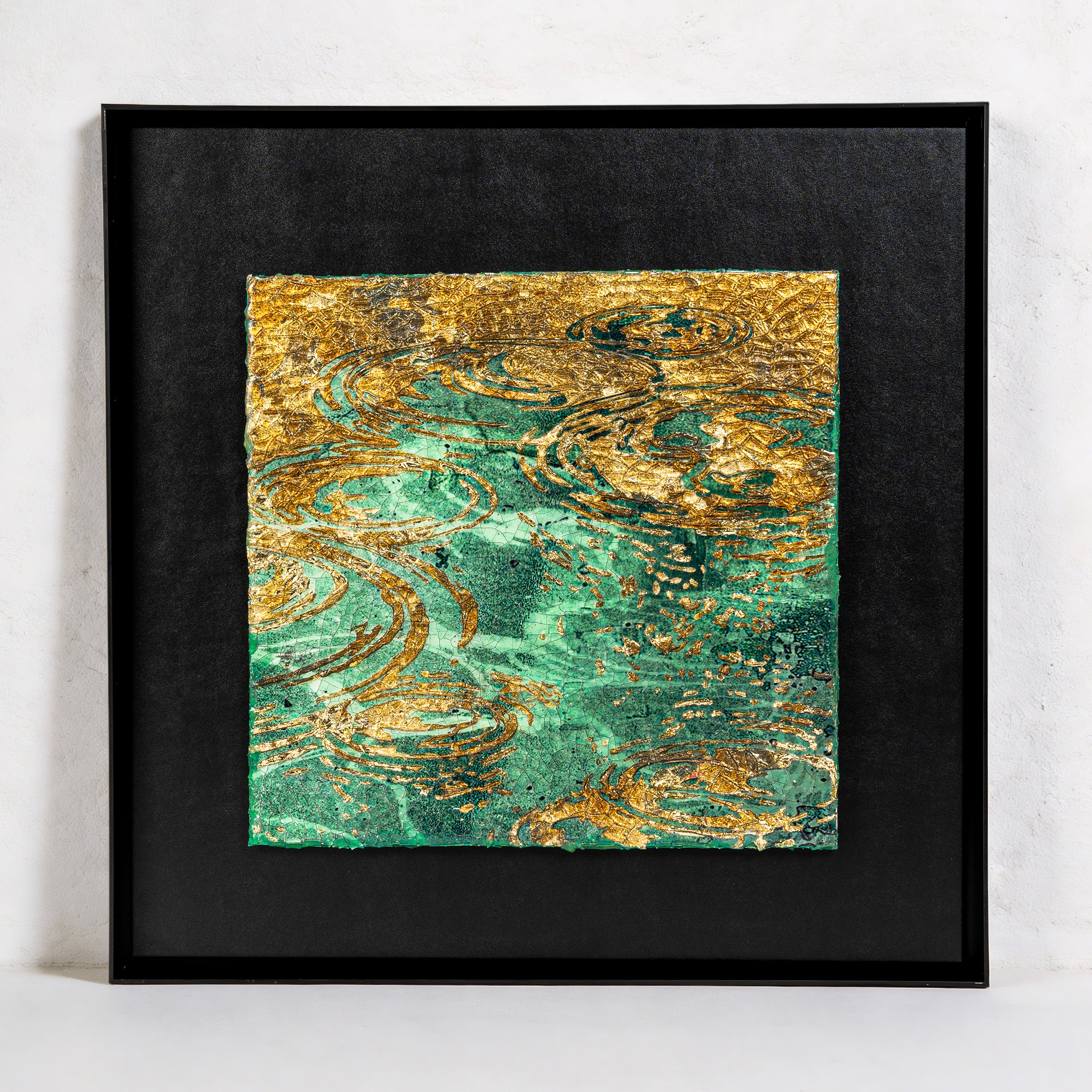
The AetherCanvas® Wabi-Sabi series was conceived under this very philosophy. The collection has abandoned the obsession with a "flawless" image. It deliberately avoids compositions that crowd the canvas or rely on high-saturation color expressions, opting instead for a highly restrained palette. By restoring focus to the inherent nature of the materials.
The natural undulations created by layering pigments, the rhythmic nuances of pressure left by manual shaping, and the subtle cracks that emerge as the coating dries are all meticulously preserved. Much like the delicate crazing on a Raku tea bowl, these marks are inherently part of the creation process. This authenticity represents the core of the dynamic vitality in Wabi-sabi aesthetics.

Wabi-sabi is never merely a decoration style; it is a profound way of engaging with life. A wall stripped of excessive ornamentation, or an artwork imbued with a palpable sense of time bestows a deeper quietude upon the environment. This tranquility may not be perceived instantly, but it gradually recalibrates one's internal state, fostering a stable and focused spatial aura.
Only when a space relinquishes the pursuit of perfection can one truly release their tension and slow down to perceive the profound resonance of daily life.

Read more
AetherCanvas reinterprets spatial art through the lens of Eastern energy concepts
AetherCanvas Recently Launches Water Element Art Collection in North America.
Read more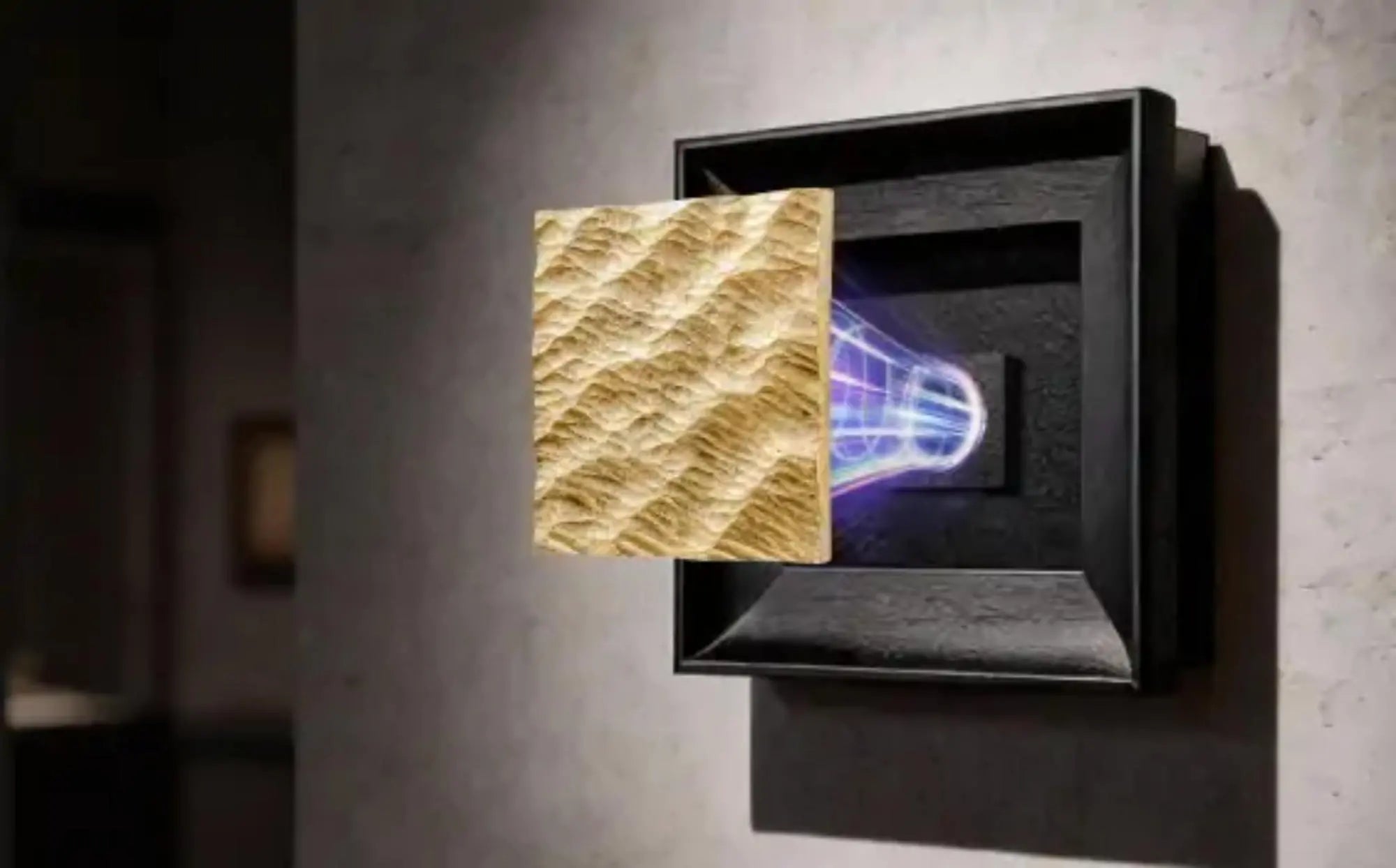
Life Out of Rhythm? Energy Art Is Becoming the New Benchmark for Luxury Interiors
In an age of constant digital noise, our homes must do more than offer rest — they need to restore inner balance. AetherCanvas® Energy Ring Series uses magnetic closure framing and natural mineral ...
Read more